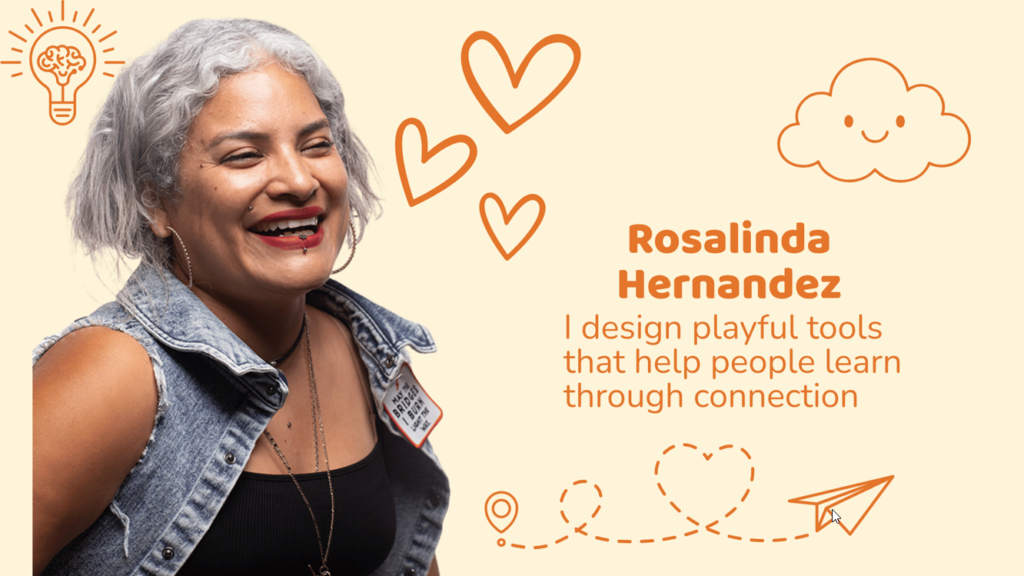
I design playful learning systems that help people re-enter learning when it gets hard.
For more than ten years, my work has lived at the intersection of game development, learning, and human behavior. I didn’t arrive here because games were novel—but because, under pressure, they consistently did something other systems didn’t.
They brought people back in.
Across classrooms, workplaces, and training environments, I kept seeing the same pattern: learning didn’t fail because people didn’t care. It failed because the cost of re-entry was too high. Frustration accumulated. Feedback came too late. Confidence eroded. Participation dropped.
Games—especially well-designed ones—handled this differently. They assumed disruption. They built in retry. They made feedback immediate and failure survivable. And in doing so, they quietly taught skills most learning systems struggle to support: resilience, emotional regulation, collaboration, and persistence.
That observation sits at the center of my work.
How I Came to This Work
When I was eight, I played Super Mario for the first time at a neighbor’s house. I didn’t understand two-player mode, so while someone else was actually controlling the character, I was smashing buttons—convinced I was the one landing every jump.
When the older kids explained what was really happening, I felt that flash of embarrassment. Then we laughed. They showed me how it worked. I tried again.
That moment contains a simple but powerful pattern: try → feedback → adjust.
Kids run that loop constantly through play, long before anyone calls it a “skill.” At the time, I didn’t have language for it—but I’ve been following that pattern ever since.
Years later, when I first tried to lead others professionally, I realized I didn’t know how. It wasn’t great—for me or for the people around me. That experience pushed me inward and into leadership work grounded in emotional intelligence, where I learned something that stuck: growth isn’t about control or perfection. It’s about practice.
Not memorization. Not willpower. Practice.
The same loop kids rehearse in play.
What I’ve Been Building
I’m the co-founder and CEO of Red Iron Labs, where for the past decade I’ve led the design of game-based learning experiences for universities, fire departments, and global organizations. Our work uses play, story, and interaction to help people learn faster, collaborate better, and perform under pressure.
One of our virtual reality games, Muffin Fight, made this especially clear. Players failed, laughed, retried, and encouraged each other—practicing resilience, empathy, and teamwork without being instructed to do so. The learning wasn’t abstract. It was embodied.
Over time, I came to understand why this worked.
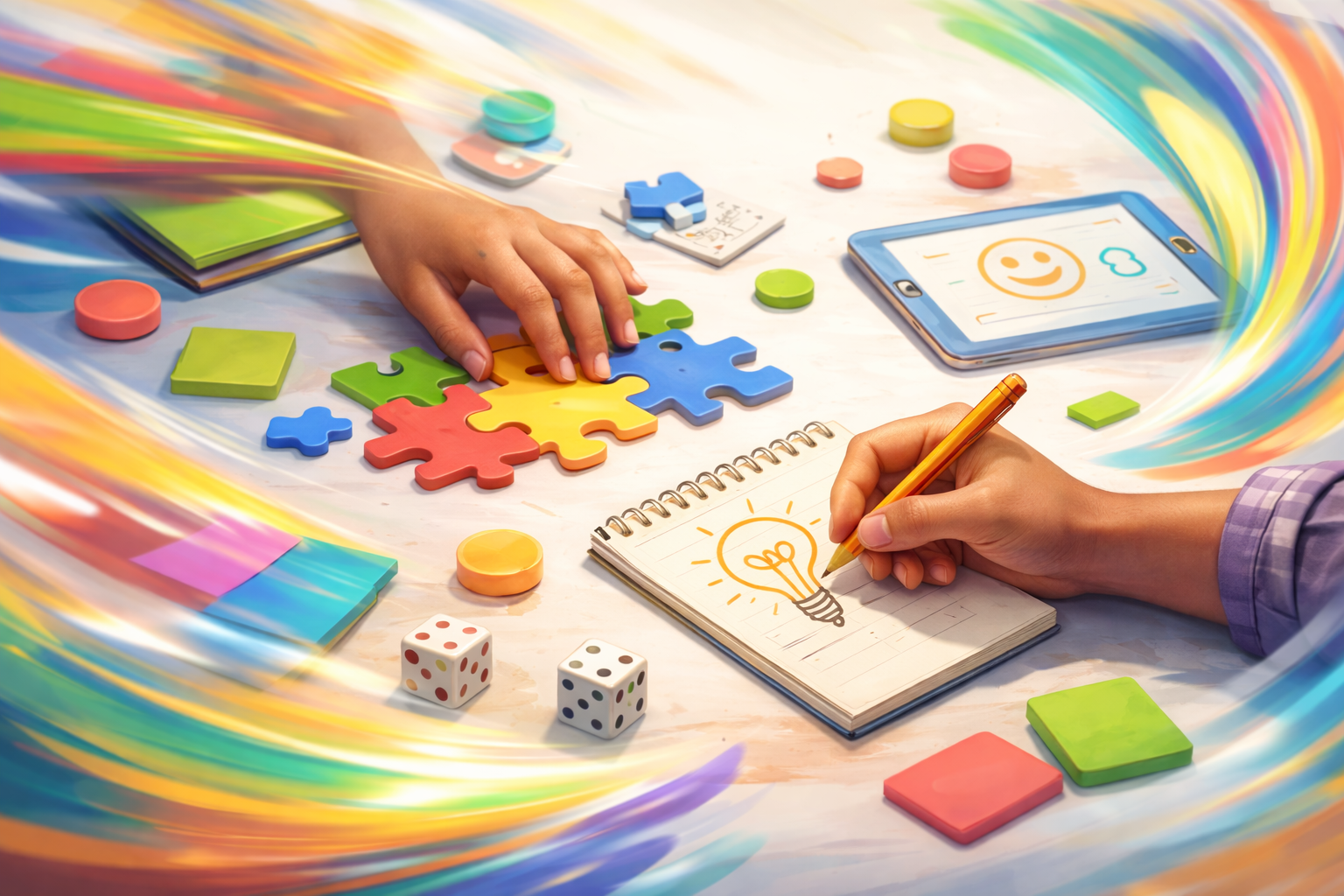
Effective learning through play blends three forces:
- story
- interaction
- and loops
Loops—the rhythm of trying, receiving feedback, adjusting, and continuing—are where real learning consolidates. They make growth feel possible again.
What I’m Exploring Now
Through Third Bell Studio, I focus on learning recovery and re-engagement: designing systems that make it easier to try again after disruption.
My work looks at how emotional engagement shapes behavior, how play supports regulation and confidence, and how learning environments—at home, in schools, and in organizations—can be designed for recovery, not just first attempts.
I’m especially interested in making complex ideas about learning feel clear, usable, and grounded in real life—for parents, educators, and teams who want practical tools rather than theory alone.
I’m currently exploring research and practice partnerships in school well-being, while continuing to build interactive learning systems rooted in play, feedback, and intentional re-entry.
Why This Matters
Learning isn’t a straight line.
It’s a loop.
And every loop begins with permission to try.
If you’re curious about how play, story, and interaction quietly build real skills—especially when motivation drops or systems break—you’re in the right place.Hello test wording #3