
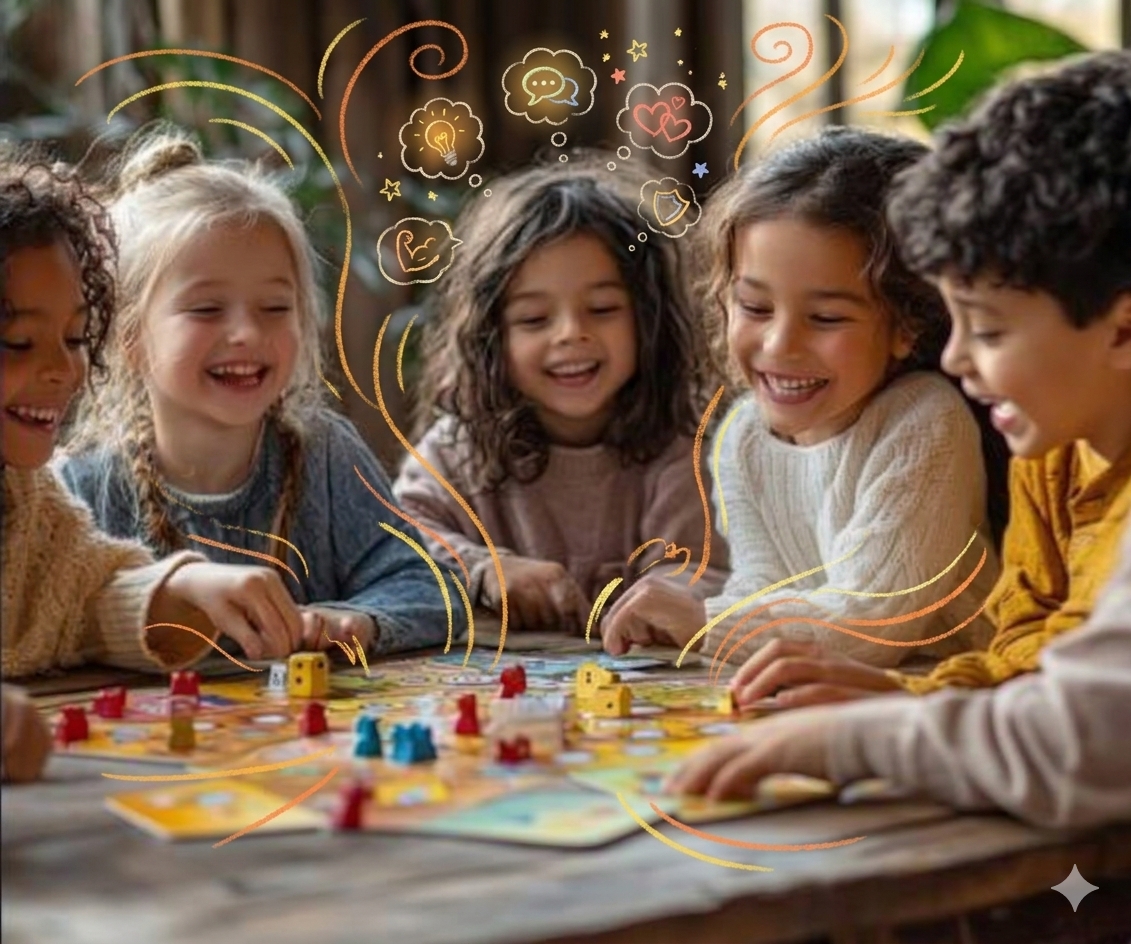
The building blocks of resilient play are hidden inside the everyday games your children already love. For more than ten years, my work has lived between two worlds: game development and education. In that time, I’ve watched a lot of learning systems break. A child gets frustrated. A learner disengages. A group loses rhythm.
When that happens, parents and teachers usually feel the brunt of it. We worry about screen time, we feel guilty about distraction, and we look at our kids playing everyday games, whether it’s Minecraft, a board game, or a messy round of make-believe, and we secretly wonder: Is this actually enough?
The truth is, kids learn best through play. But as a game designer, I can tell you that the magic isn’t accidental. There is a hidden structure behind why certain games hook our kids and build real-life skills, while other activities leave them completely drained.
When you understand how these mechanics work, you can stop fighting the screen battles and start spotting the real growth happening right in front of you.
Understanding the Building Blocks of Resilient Play
1. Story Gives Meaning
Think about why your child gets attached to certain characters, or why a dramatic game of “the floor is lava” matters so much to them. Narrative creates an emotional connection.
When a child steps into a story, abstract concepts like empathy instantly get context. They don’t just hear a rule about being kind; they feel the stakes alongside the characters. Story moves kids from passive observers into active participants. It gives a reason for the game to exist.
2. Loops Create Practice
In game design, loops are the repeating cycles of play: try, fail, adjust, succeed. It’s why a kid will happily retry a tricky Mario Kart track or rebuild a collapsed tower twenty times without giving up, but might throw a pencil in frustration over a math worksheet.
Games offer a safe space to fail. The stakes are low, so frustration turns into curiosity instead of a meltdown. This is exactly how resilience is built. Kids don’t learn perseverance by being lectured to “try again.” They learn it by experiencing the cycle of failing, laughing it off, and figuring it out. Loops are where resilience becomes a lived, everyday habit.
3. Interaction Makes Skills Stick
The final piece is interaction, the choices children make and the immediate feedback they get. Unlike watching a show on a tablet, true play puts your child in the driver’s seat.
When they have to cooperate with a sibling, negotiate rules, or test boundaries, they are practicing social-emotional skills in real-time. Confidence isn’t built through abstract praise; it’s felt the moment a child takes a risk, makes a choice, and watches the outcome unfold.
Shifting Your Perspective
You don’t need expensive software or a complex lesson plan to bring the building blocks of resilient play to life. They are already waiting at your kitchen table.
The next time you see your child deep in play, try to look past the mess or the screen time and look for the design:
- What story are they telling themselves right now?
- Watch their loop– how do they react when something goes wrong?
- Look at the interaction– how are they testing their choices?
When we stop treating play as a distraction and start seeing it as a masterclass in resilience, that’s when learning recovery truly begins. No worksheets. No pressure. Just a new pair of eyes for the hard work your child is already doing.
Want to learn more about how these mechanics unlock self-advocacy? Watch my webinar presentation or read About Third Bell Studio.